Optical Communications
Space
OPTIMAS Project: Multi-Domain Laser Communications Network
1. Global Objective
The primary mission of OPTIMAS is to define and develop a secure, high-speed, multi-domain laser communications network. This infrastructure is based on the implementation of high-capacity (Gbps) bidirectional optical systems, featuring:
- QKD Integration: Advanced study of Quantum Key Distribution capabilities for enhanced security.
- Satellite Interoperability: Utilization of LEO, MEO, and GEO constellations.
- Multi-Domain Connectivity: Ensuring seamless, secure links across Space, Air, Naval, and Land domains, including shore-based C5ISR centers.
OPTIMAS will provide critical communications support for ISTAR (Intelligence, Surveillance, Target Acquisition, and Reconnaissance) missions, enabling both manned and unmanned aircraft to collect and relay high volumes of sensitive data in complex operational scenarios.
2. Specific Objective: The ALCoS Prototype
A core focus of this project is the design of a prototype for an Airborne Laser Communication System (ALCoS).
Key Features & Integration:
- Platform Versatility: Designed for integration into various aircraft; specifically envisioned for the future EuroMALE RPAS currently under development.
- Bidirectional Links: The prototype will focus on demonstrating robust Air-to-Space optical link capabilities.
- Environmental Optimization: The design phase includes dedicated activities to assess and mitigate atmospheric and environmental impacts on laser performance.
3. Testing and Scalability
To validate the system’s effectiveness, a Live Test Campaign will be conducted to evaluate Air-to-Ground and Space-to-Ground optical links.
- Strategic Architecture: The OPTIMAS prototype is built on modular and scalable principles, ensuring it can be easily adapted to naval and land domains or upgraded with emerging technologies in the future.

Underwater
Underwater Laser Communication System
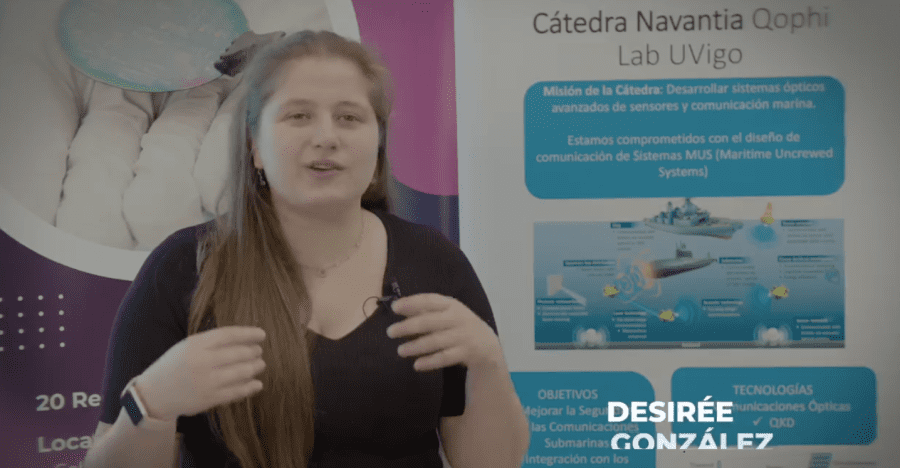
This section outlines the primary tasks for the development and testing of the underwater optical communication infrastructure.
1. Point-to-Point Optical Communication
The objective is to establish a direct line-of-sight (LOS) link using high-precision optical components. Key activities include:
- Hardware Assembly: Integration of transmitter and receiver units using state-of-the-art Commercial Off-The-Shelf (COTS) components.
- Optical Design: Design and assembly of specialized optical systems, including beam expanders, to optimize signal propagation.
- Test Environment Setup: Configuration of the water tank facilities to replicate underwater operational environments.
- Channel Characterization: Analysis of attenuation and scattering parameters to simulate various maritime conditions (e.g., turbidity, salinity).
- Protocol Testing: Execution of communication trials across different modes:
- Simplex (One-way)
- Half-Duplex (Time-slot based)
- Full-Duplex (Simultaneous bidirectional)
2. Diffuse Optical Communication
This phase focuses on non-line-of-sight (NLOS) or wide-angle connectivity to increase link robustness.
- Lens System Adaptation: Modification of the optical assembly to support diffuse light emission and reception.
- Comparative Testing: Execution of the same validation battery used in the point-to-point phase to benchmark performance and reliability under diffuse conditions.
3. The PULSE Hackathon is a 48 hour competition for students co-organized by monodon and uVigo’s QoPHI LAB.
In this challenge, students from all over europe are invited to work together and solve a problem around Underwater Optical Communication. The ultimate goal is to create innovative solutions at the time that we provide an opportunity for students to take contact with real world / industry problems and learn more of this field of study.
PULSE HACKATHON 2026
- From 8 to 10th of july
- Vigo, Spain (Campus de Vigo, As Lagoas, Edificio Miralles)
- Open to 40 students that will work in teams of 5 to 6 persons.

Nextchip Chair
Navantia Chair on Underwater Robotics and Deeptech Technologies
Related Activities
- R&D&i Activities: Development of an underwater robot prototype capable of descending to great depths, and joint projects on topics such as new materials, underwater communications, photonics for phase-change materials, and neuromorphic computing.
- Training Activities: Contributing to the practical training of UPM students through mentorships and scholarships for the completion of Final Degree Projects (Bachelor’s and Master’s theses), doctoral dissertations, and other specific projects.
- Promotion: Dissemination of the Navantia hub within the university environment and hosting talent attraction talks.
- Laboratory: Creation of a laboratory combining resources from both parties.
Cátedras Chip
monodon is part, together with La Uvigo and other companies, of receiving aid from the Government of Spain from the ‘Cátedras Chip’ program, framed in the Strategic Project of Microelectronics and Semiconductors (PERTE Chip).
The University of Vigo will receive 4.7 million euros for the training of professionals in microelectronics. The project is called ‘Open Access to Tools for testing and characterization of New Generation Photonic and Electronic Chips-NEXTCHIP’ and will serve to train professionals in this sector and enhance research. We are developing a research about underwater optical communication.
Auspire-RMIT
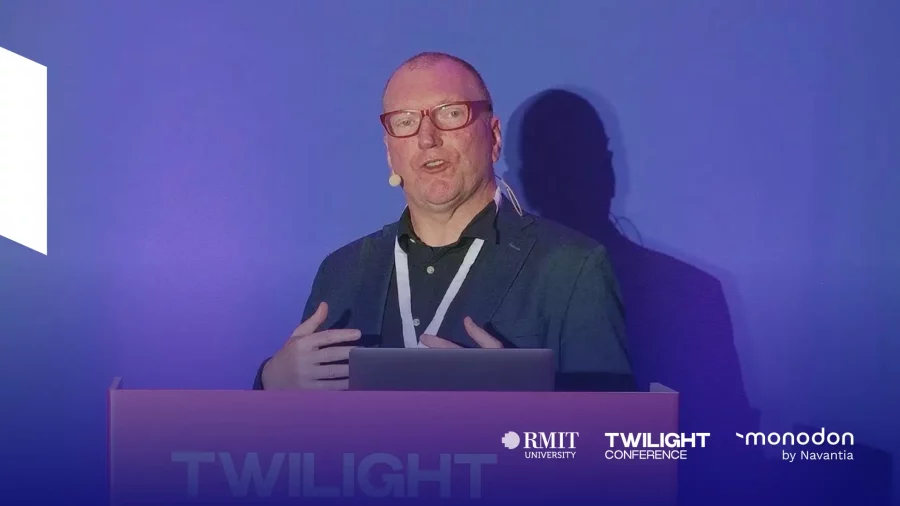
Navantia Chair on Underwater Robotics and Deeptech Technologies
Related Activities
- R&D&i Activities: Development of an underwater robot prototype capable of descending to great depths, and joint projects on topics such as new materials, underwater communications, photonics for phase-change materials, and neuromorphic computing.
- Training Activities: Contributing to the practical training of UPM students through mentorships and scholarships for the completion of Final Degree Projects (Bachelor’s and Master’s theses), doctoral dissertations, and other specific projects.
- Promotion: Dissemination of the Navantia hub within the university environment and hosting talent attraction talks.
- Laboratory: Creation of a laboratory combining resources from both parties.
monodon-PF1
Applicants are invited to propose a research project around developing innovative laser communication physical layer technologies that can address current escalating demands for data bandwidth and security in underwater environments.
For further information, please read the Position Description and visit the Monodon and RMIT University websites.
AuSpire partner monodon is the research and development area of Navantia, S.A., S.M.E, a multinational shipbuilding company based in Spain. monodon works from an ecosystem-based perspective, collaborating with experts from academia, start-ups and industry to develop innovative solutions aligned with its values and long-term product vision.
With a strong focus on deeptech, monodon seeks high-value technological solutions with dual-use potential across multiple technological fields. Its work emphasises applied research, responsible innovation and collaboration to address complex challenges in advanced engineering and technology development.
Monodon is co-supervising the postdoctoral positions ‘Underwater Laser Communication Signal Processing Technologies’ and ‘Physically Unclonable Functions for Secure Optical Communications’ with Arnan Mitchell from RMIT University.
Applications must be submitted by 11:59pm CET on 26 January 2026.
Learn more and apply at auspire.eu
AuSpire is a Marie Skłodowska-Curie Actions project, co-funded by the European Union and coordinated by RMIT Europe.

Papers
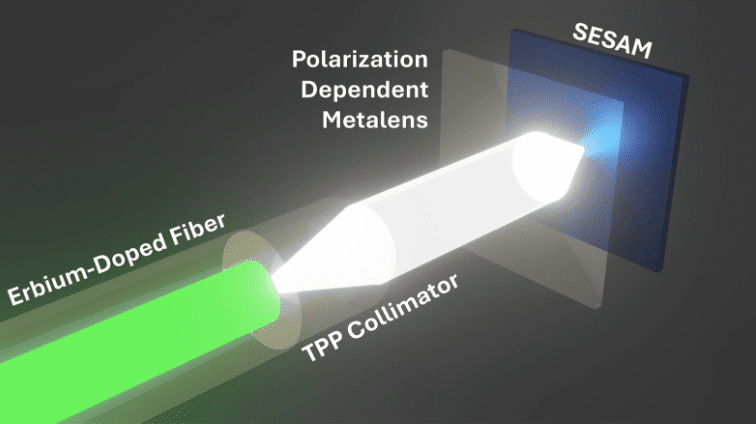
Modeling a metalens-based system for GHz fiber mode-locked lasers
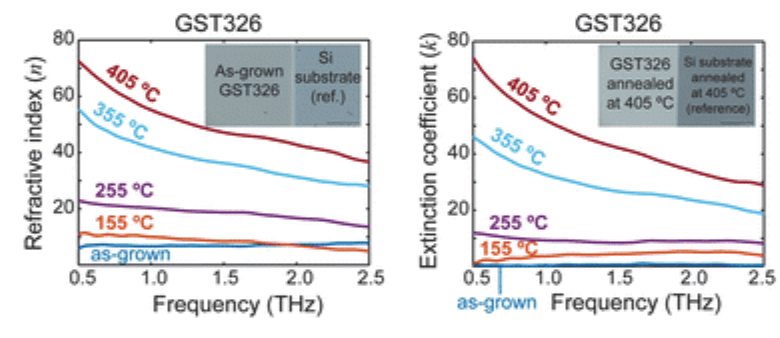
Terahertz spectroscopic characterization of Ge3Sb2Te6 compounds for active applications
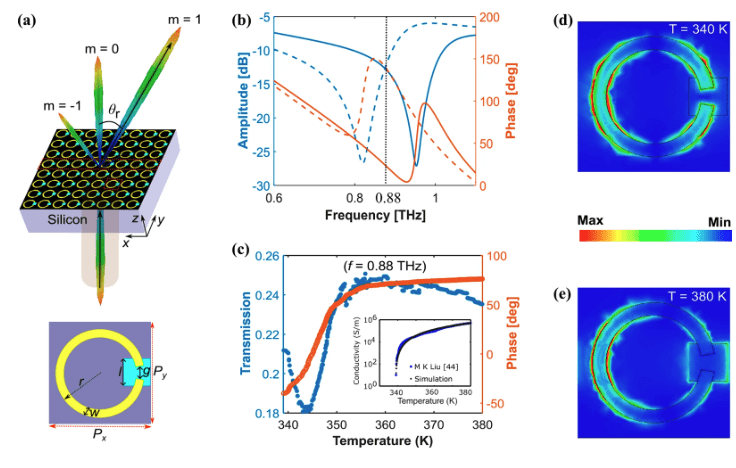
Metasurface based on phase change materials for electrically reconfigurable THz beam steering in copolarized transmission mode
Deep Learning Models for Realistic Multicomponent Signal Modulation Classification