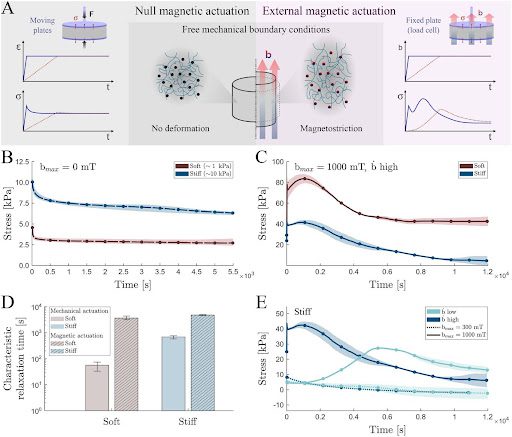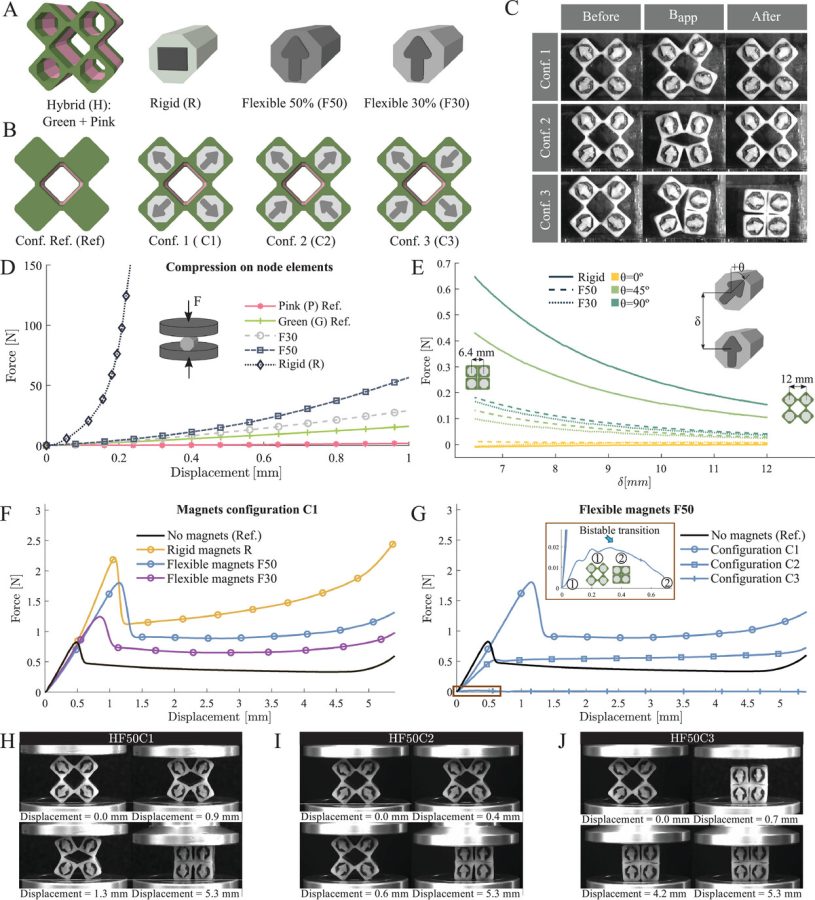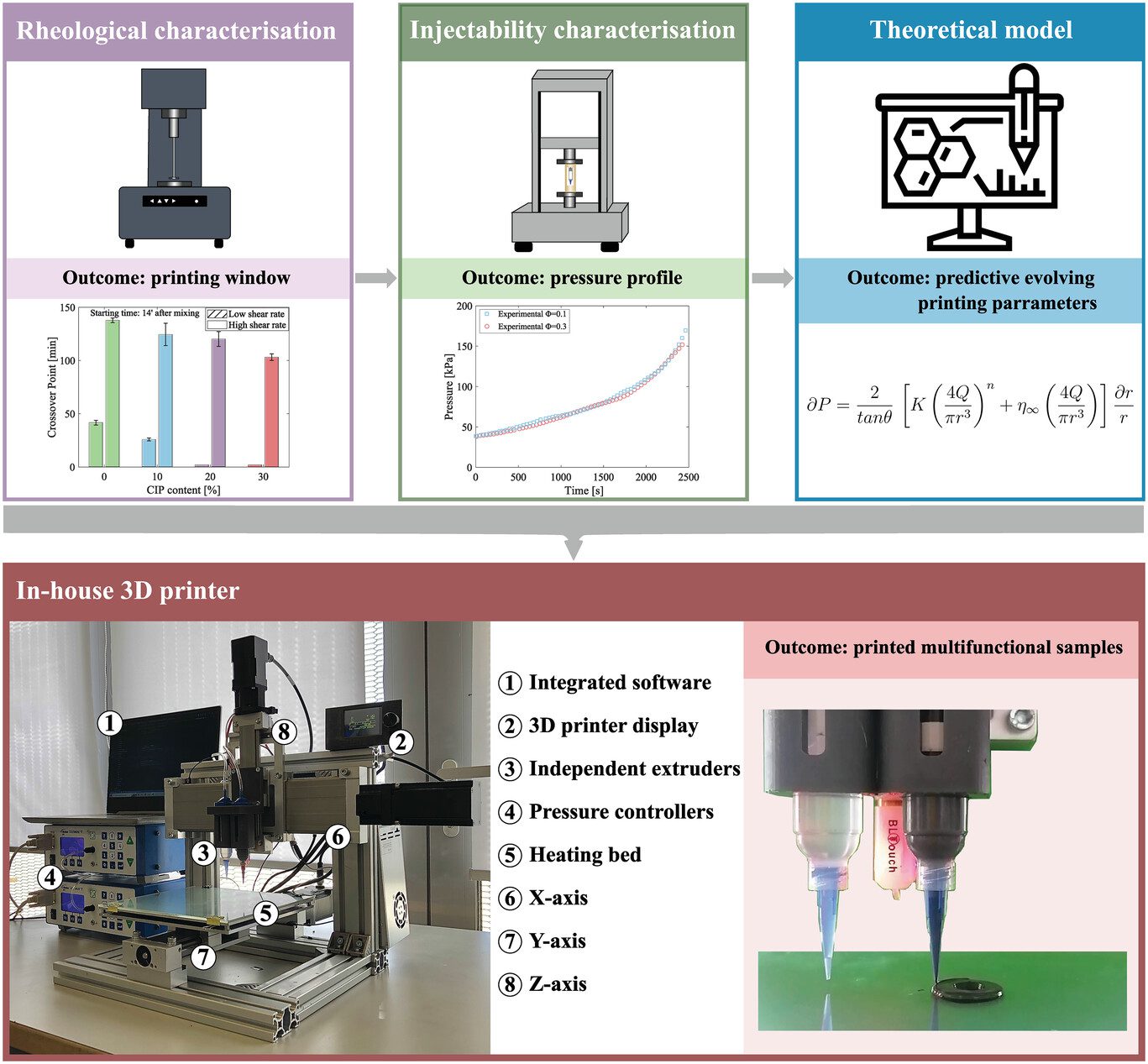
Soft multifunctional materials allow for mechanical sensing or actuation as aresponse to multiple physical stimuli, while providing material stiffness thatmimic soft biological tissues (≈1–10 kPa). One of the main bottlenecks in thestate of the art relates to the difficulty for manufacturing complex shapeswhen using inks whose properties significantly change over the printingtime. To overcome this issue, the implementation of a hybrid (theoretical-experimental) framework that allows optimal printability of time-dependentviscosity inks by using the direct ink writing technology. Although the rheo-logical properties of the ink vary during printing time, a combination of theo-retical and experimental methods provides evolving printing conditions thatensure efficient and robust printability over the process. The method removesthe need of introducing additives to the ink. To enable this technology, anin-house printer that provides flexibility to modulate the extrusion pressureover printing time is developed. The method is validated by manufacturingmagnetorheological elastomers and conductive soft materials for specificbioengineering and soft electronics applications.
Collaboration