Thermo-electro-mechanical microstructural interdependences in conductive thermoplastics
Javier Crespo-Miguel, Sergio Lucarini, Ángel Arias, Daniel García-González
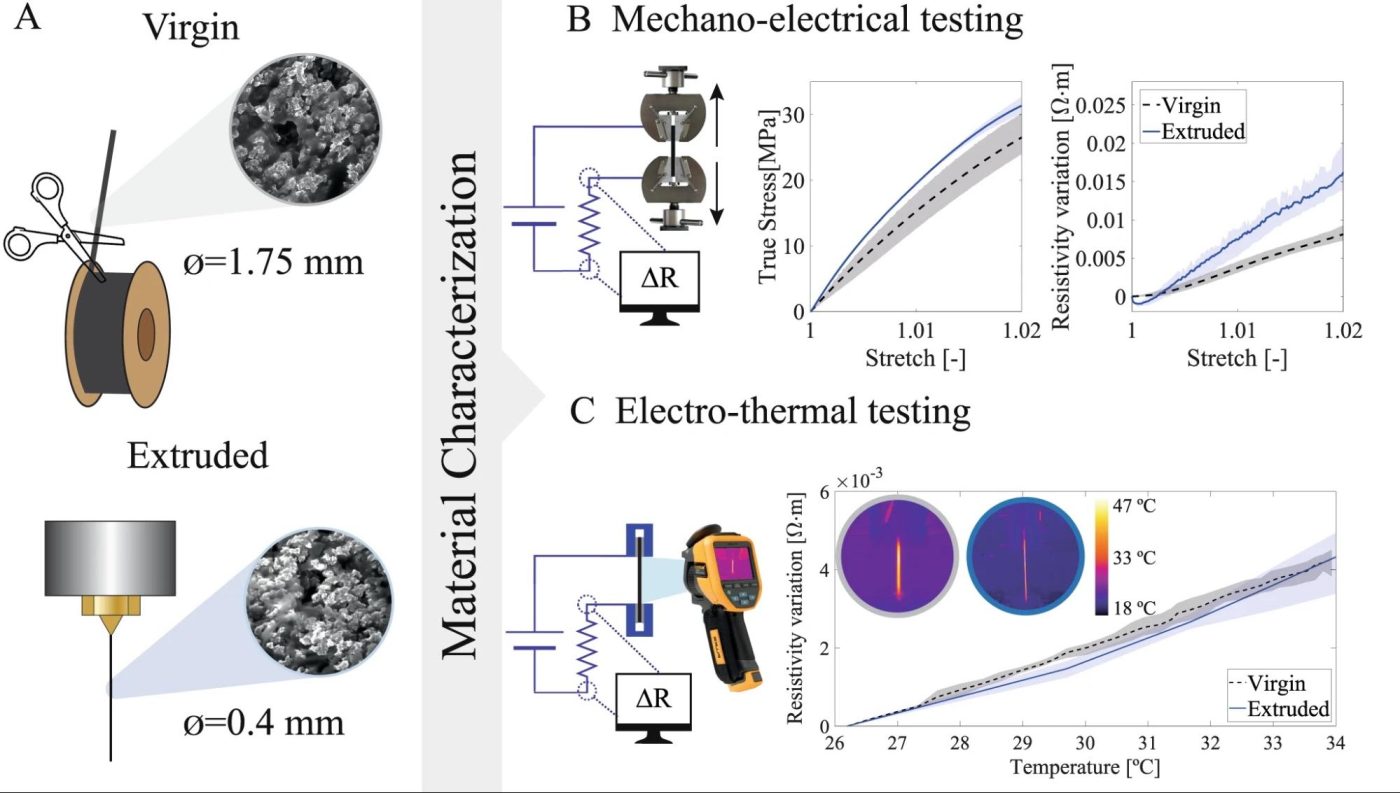
Additive manufacturing has enabled the design of thermoplastic components that provide structural support, electrical conductivity and heat generation modulated by mechanical deformation. The mechanisms and interplays that govern the material response at the microstructural level remain, however, elusive. Here, we develop an experimental method to characterise conductive filaments from a combined mechanical, electrical and thermal perspective. This approach is used to unravel exciting material interplays of conductive polylactic acid. To overcome experimental limitations that prevent a complete microstructural analysis of the problem, we develop a full-field homogenisation framework and implement it for finite elements. The framework accounts for viscoplasticity, electrical and thermal conduction, convection and heat generation via Joule effect, as well as for the interdependences between them. After experimental validation, the framework is applied to virtually optimise fabrication requirements to obtain desired properties in final products, i.e., stiffer products, filaments with higher conductivities or with better sensing capabilities.
Collaboration


Related papers
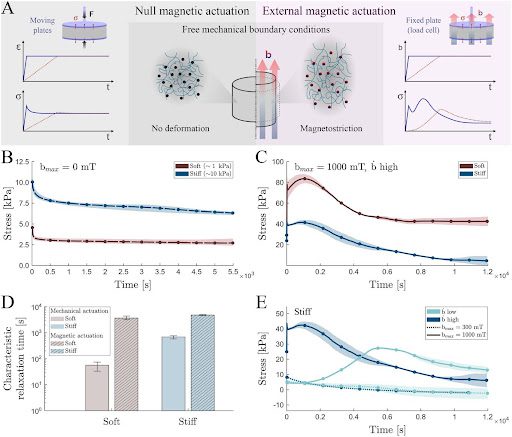
Magnetic‐Driven Viscous Mechanisms in Ultra‐Soft Magnetorheological Elastomers Offer History‐Dependent Actuation with Reprogrammability Options
Reprogrammable Mechanical Metamaterials via Passive and Active Magnetic Interactions
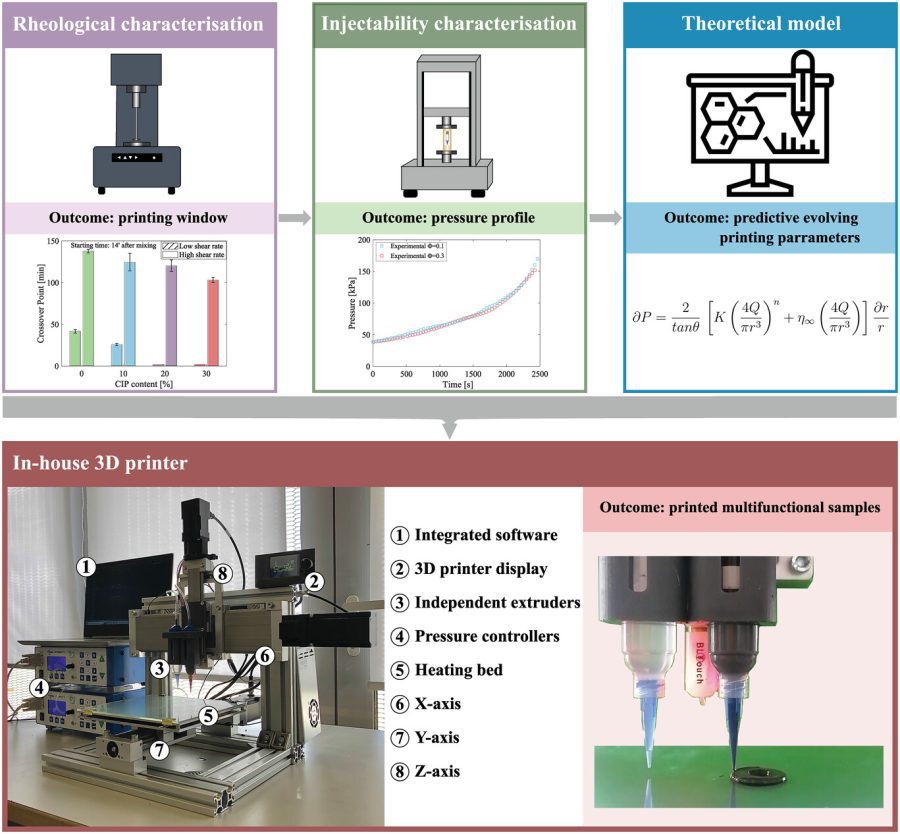
Computationally Guided DIW Technology to Enable Robust Printing of Inks with Evolving Rheological Properties