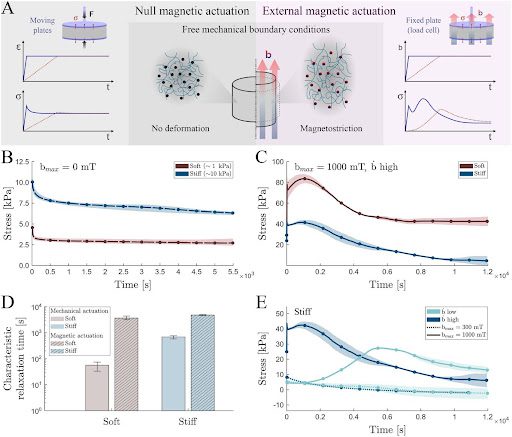
This work elucidates an important open question in the field of mechanically soft magnetorheological elastomers (MREs): how microstructural rearrangements during magnetic actuation modulate their viscoelastic behavior. Experimental assays are provided on mechanically confined and very soft MREs that, under magnetic actuation, show an order of magnitude increase in relaxation times compared to purely mechanical cases. It is demonstrated that such a modulation in the viscous response can be tuned by the amplitude and actuation rate of the magnetic stimuli, and is intrinsically linked to microstructural rearrangements of the magnetic particles. Motivated by these experimental observations, magnetic actuation protocols are conceived to enable mechanical responses in soft materials with force-memory. Specifically, due to the magnetically induced long-term viscous relaxation, one can induce magnetic-driven yielding by introducing material hardening during cycling loading. This mechanical memory of the MRE can be subsequently removed by releasing the magnetic stimuli for 1 h, resetting the material performance and its microstructural state. These mechanisms are deeply understood by a combination of different experimental approaches and a new theoretical magneto-mechanical continuum model. The results reported herein respond to unraveled fundamental questions in soft MREs, and provide a game-changing concept for designing a new branch of soft sensor-actuator and reservoir computing systems.
Collaboration



Related papers
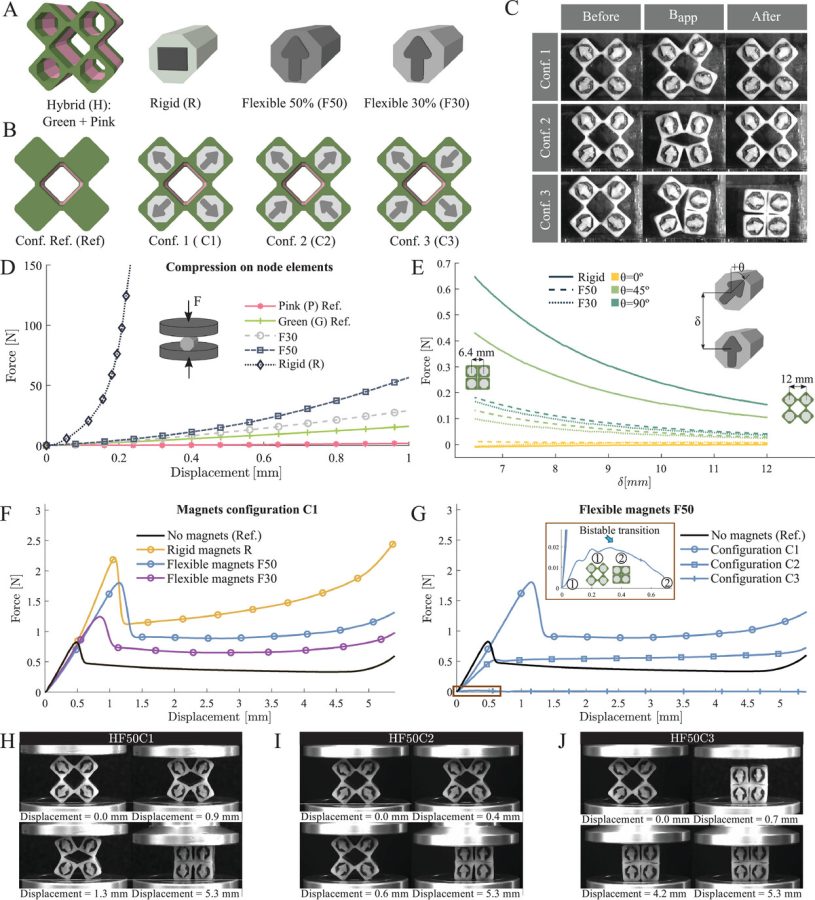
Reprogrammable Mechanical Metamaterials via Passive and Active Magnetic Interactions
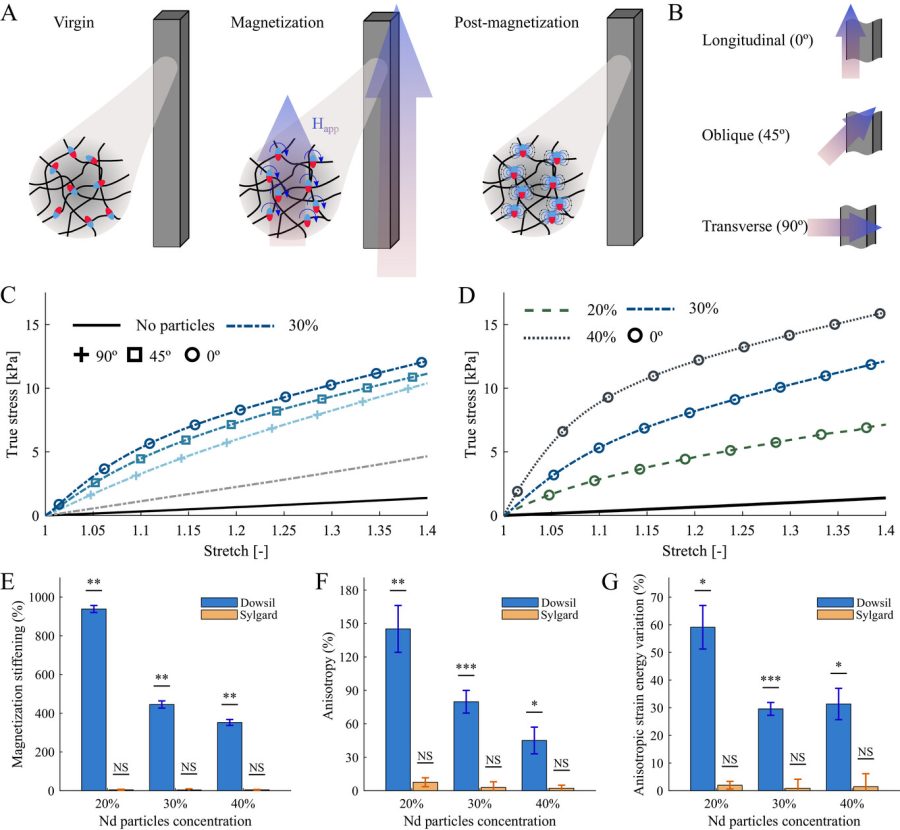
Topology and Material Optimization in Ultra‐Soft Magneto‐Active Structures: Making Advantage of Residual Anisotropies
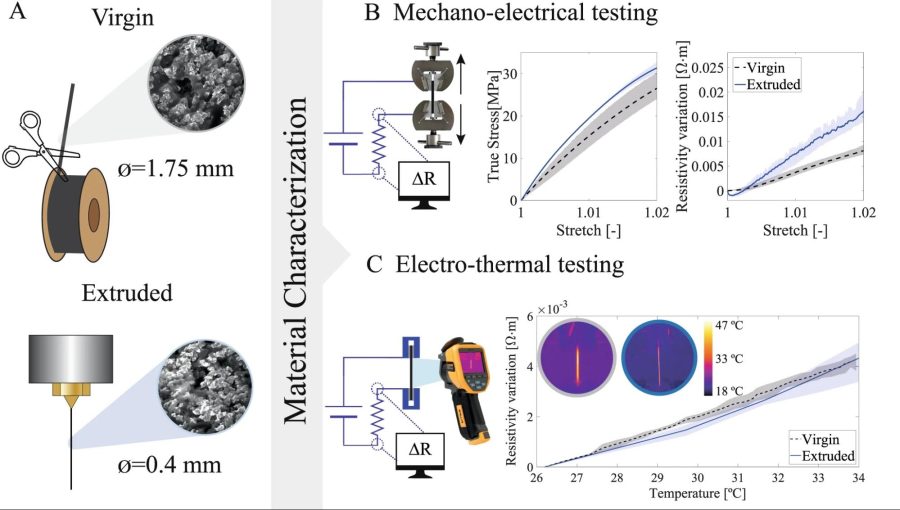
Thermo-electro-mechanical microstructural interdependences in conductive thermoplastics
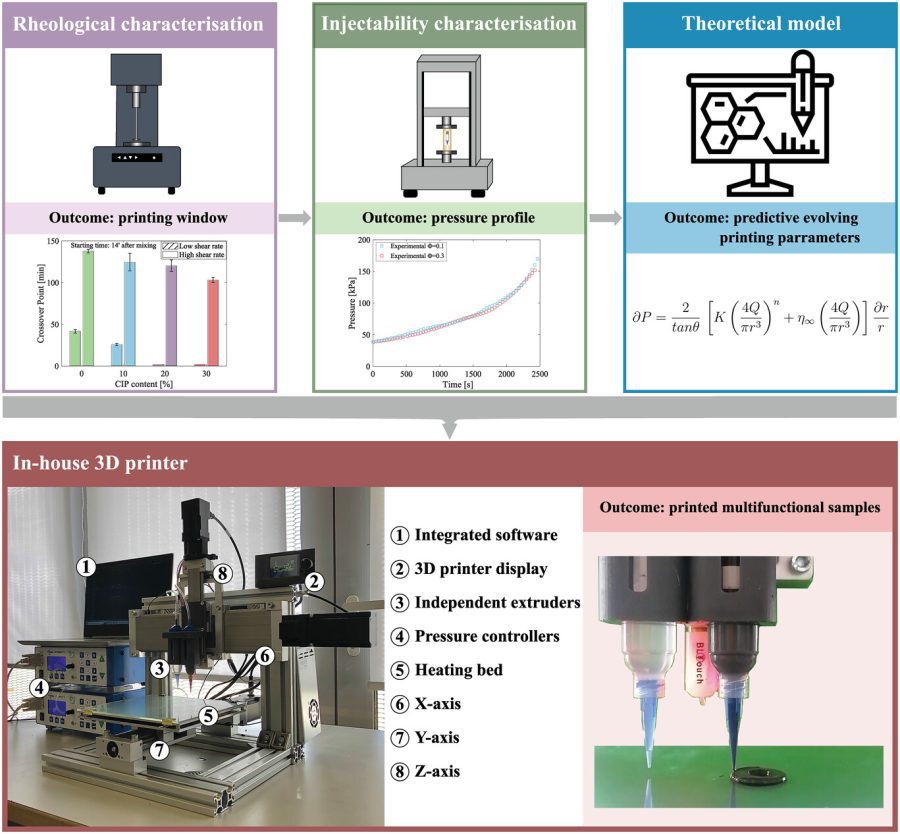
Computationally Guided DIW Technology to Enable Robust Printing of Inks with Evolving Rheological Properties
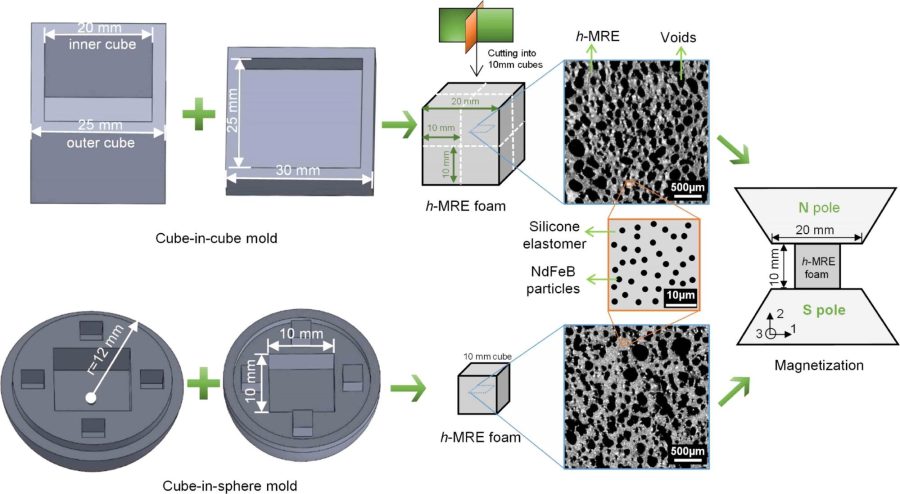
Experiments and modeling of mechanically-soft, hard magnetorheological foams with potential applications in haptic sensing