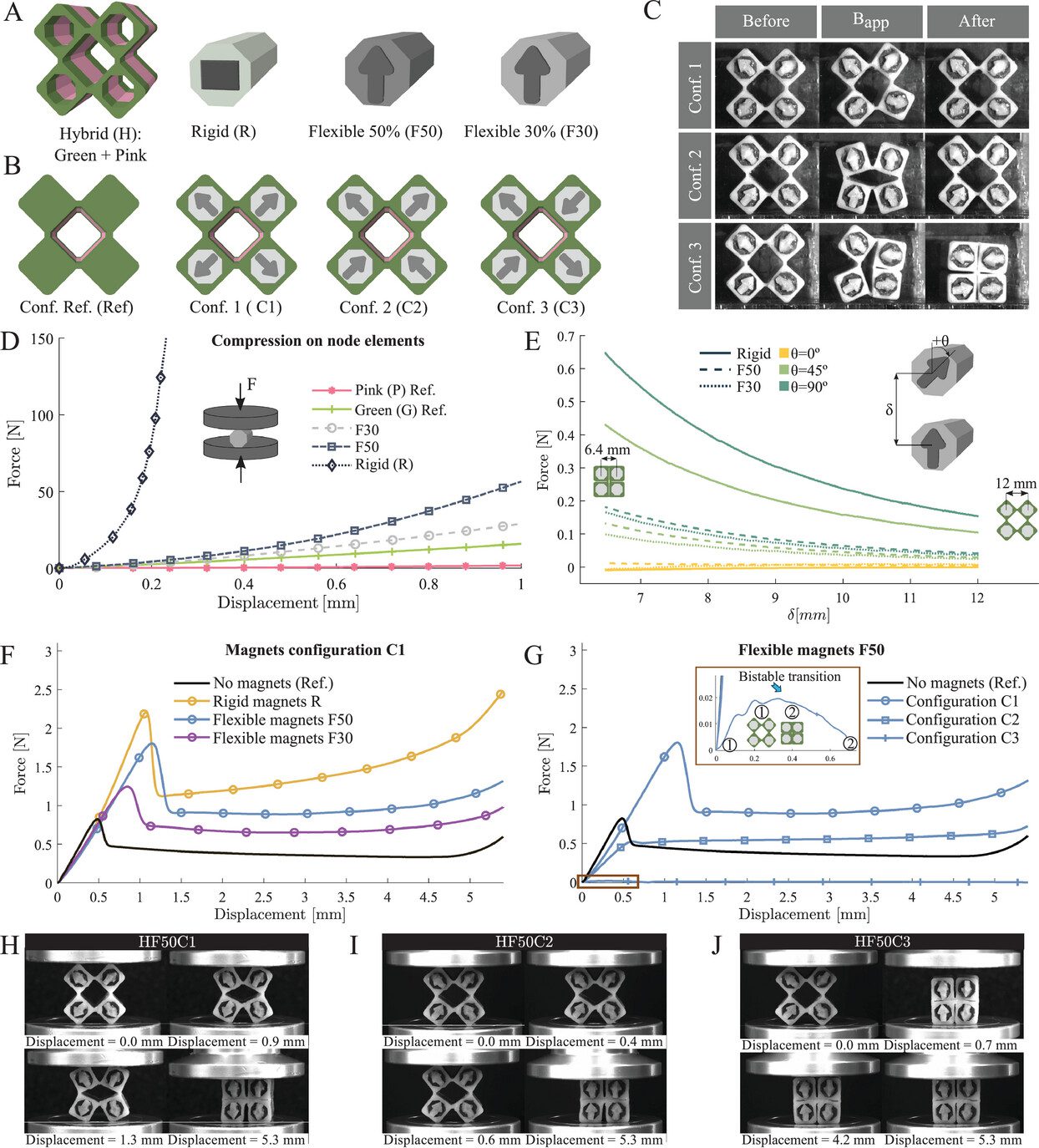
This study experimentally demonstrates the reprogrammability of a rotating-squares-based mechanical metamaterial with an embedded array of permanent magnets. How the orientation, residual magnetization, and stiffness of the magnets influence both the static and dynamic responses of the metamaterial is systematically investigated. It is showed that by carefully tuning the magnet orientation within the metamaterial, notable tunability of the metamaterial response can be achieved across static and dynamic regimes. More complex magnetic node configurations can optimize specific structural responses by decoupling the tunability of quasi-static stress–strain behavior from energy absorption under impact loading. Additionally, reprogrammability can be further enhanced by an external magnetic field, which modulates magnetic interactions within the structure. This work paves the way for developing engineered structural components with adaptable mechanical responses, reprogrammable through either the redistribution of magnetic elements or the application of an external magnetic field.
Collaboration



Related papers
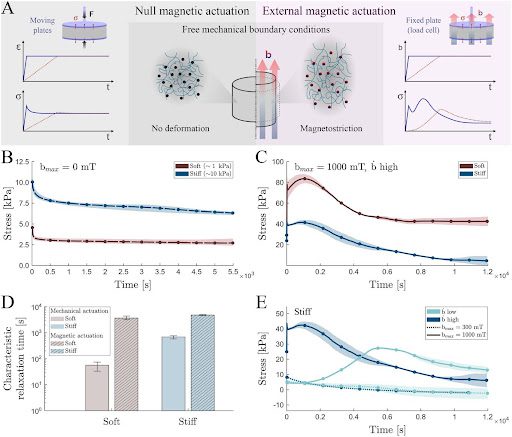
Magnetic‐Driven Viscous Mechanisms in Ultra‐Soft Magnetorheological Elastomers Offer History‐Dependent Actuation with Reprogrammability Options
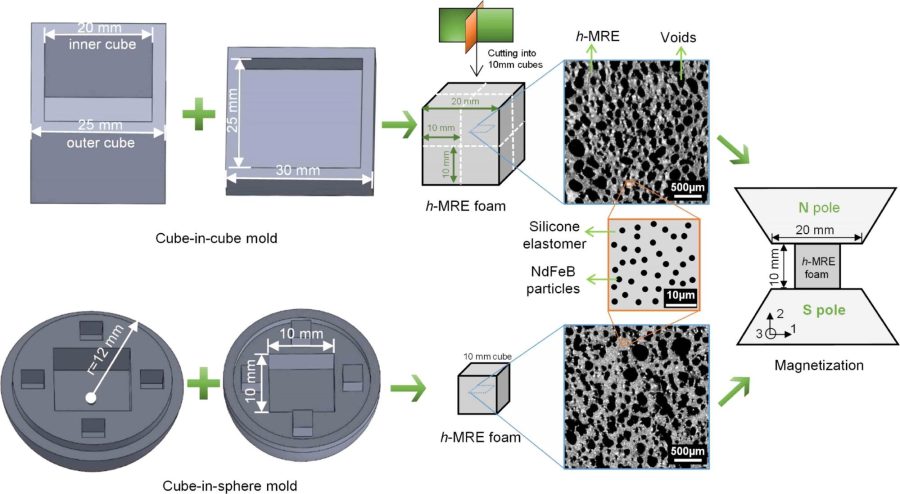
Experiments and modeling of mechanically-soft, hard magnetorheological foams with potential applications in haptic sensing
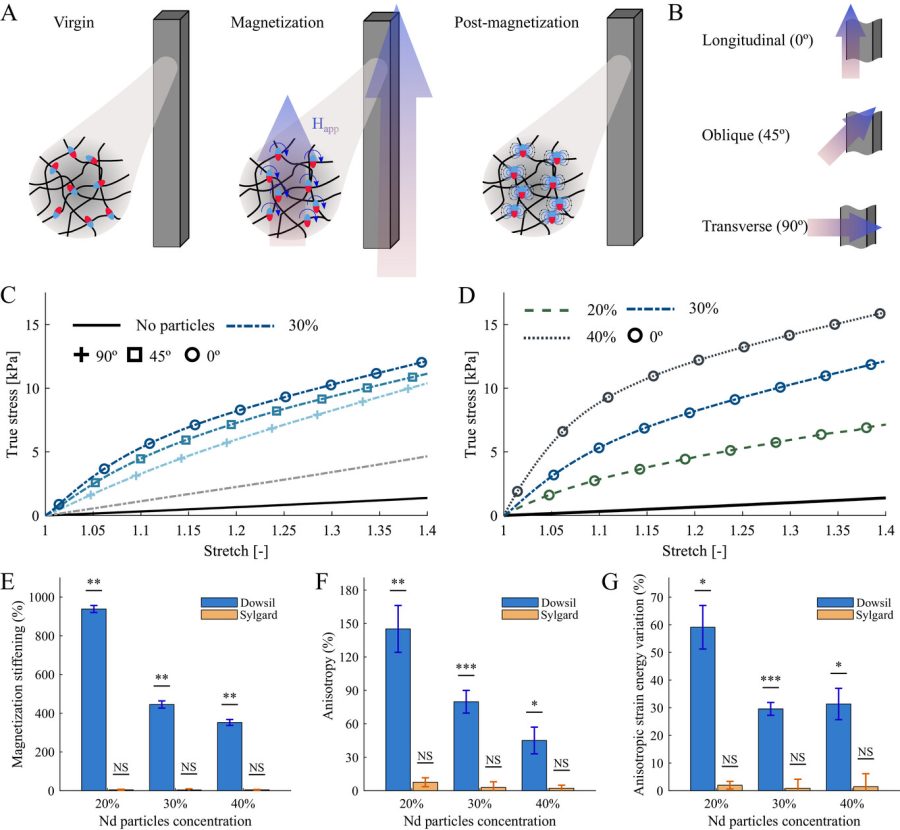
Topology and Material Optimization in Ultra‐Soft Magneto‐Active Structures: Making Advantage of Residual Anisotropies
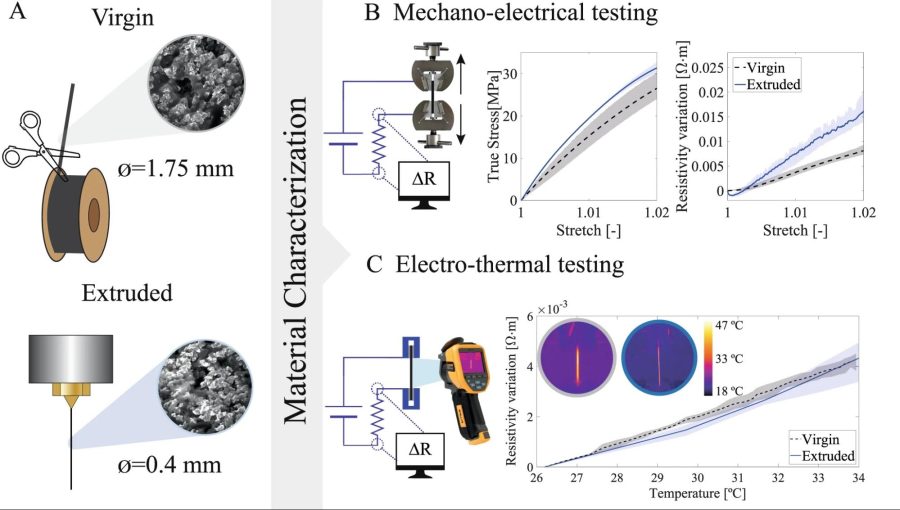
Thermo-electro-mechanical microstructural interdependences in conductive thermoplastics
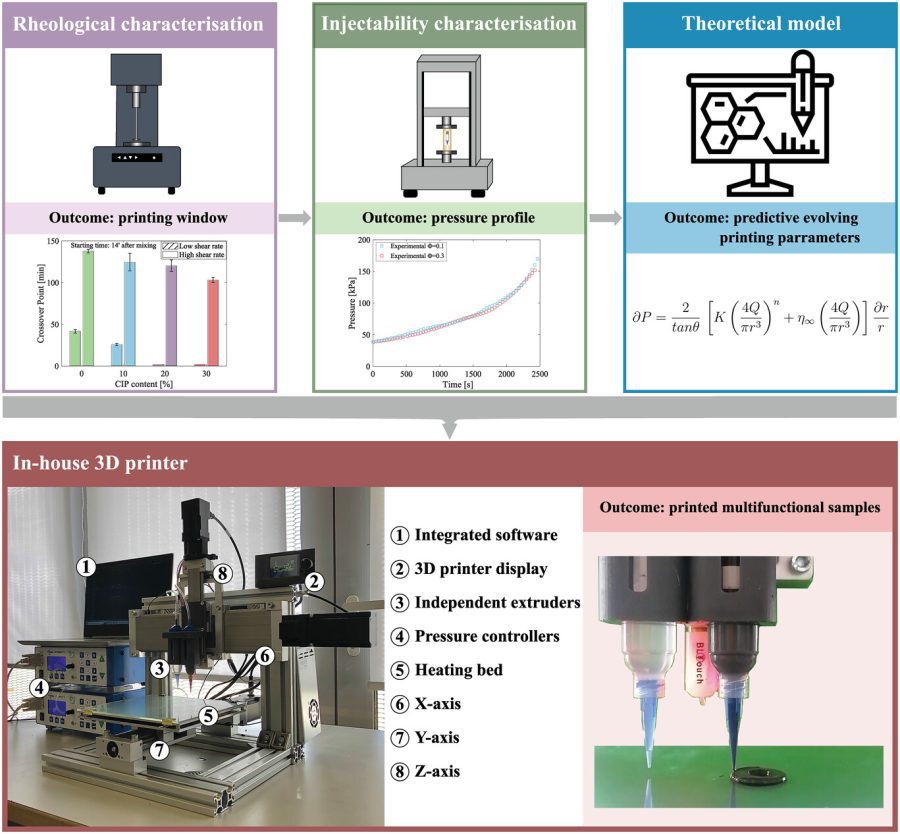
Computationally Guided DIW Technology to Enable Robust Printing of Inks with Evolving Rheological Properties