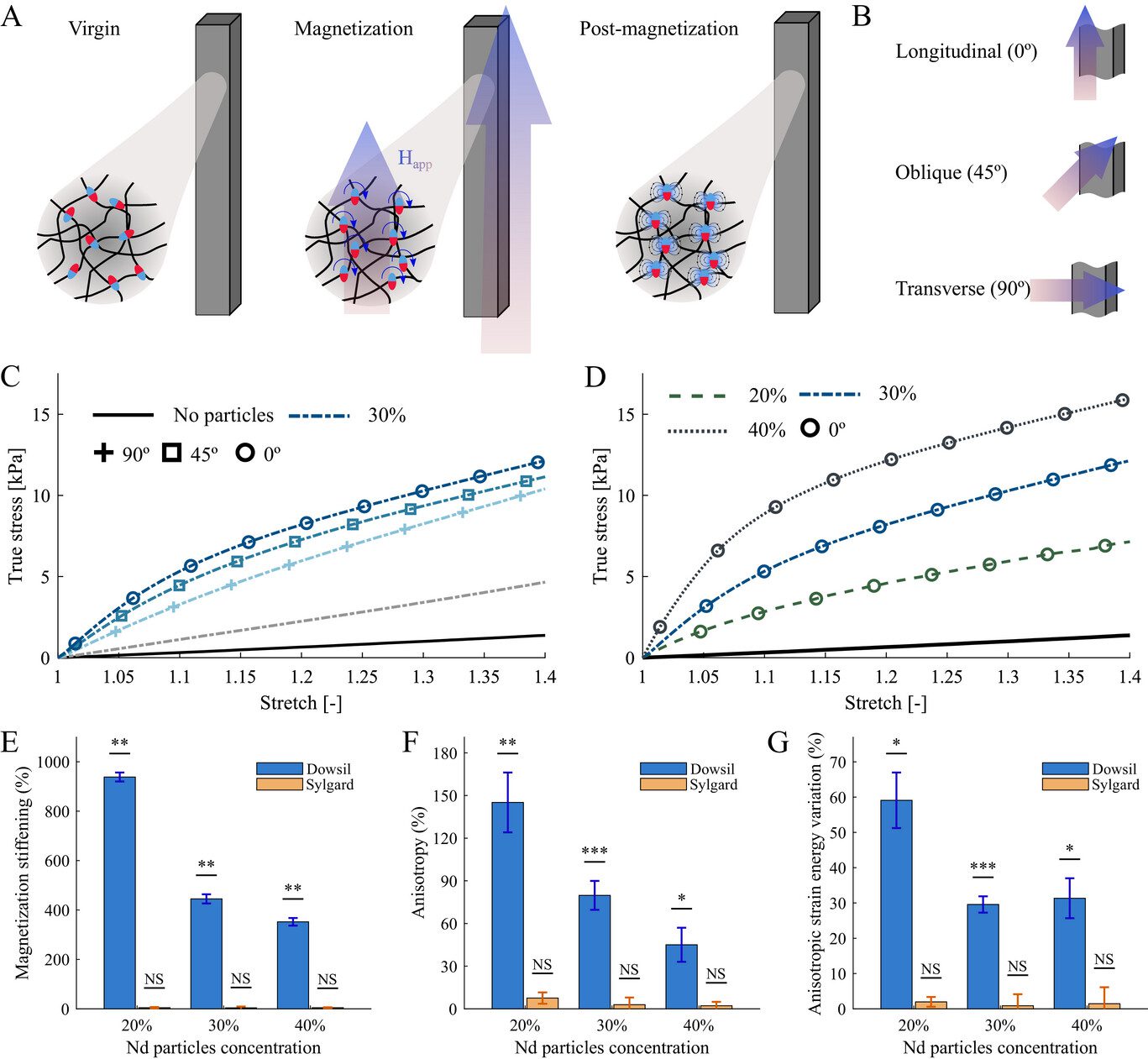
Ultra-soft magnetoactive materials (stiffness <10 kPa) have transformed bioengineering and soft robotics, enabling remote actuation within soft biologically relevant environments. Despite major advances in the last decade, the complexity of their magneto-mechanical coupled behavior still hinders efficient topology and material optimization strategies for these smart structures. Two primary challenges remain: incomplete understanding and identification of the underlying physical mechanisms, and numerical limitations that restrict realistic simulation of the fully coupled problem. This work addresses these challenges by identifying and characterizing mechanical anisotropies arising from residual magnetization. In ultra-soft matrices, residual magnetization leads to microstructural rearrangements of magnetic particles, inducing mechanical anisotropy even without external fields. This anisotropy depends nonlinearly on matrix stiffness, particle properties, volume fraction, and apparent magnetization direction. These dependencies are experimentally quantified and described by a new constitutive model. The model is implemented within a computational framework that integrates these effects into advanced topology and material optimization algorithms. The framework is then used to demonstrate how accounting for these physical mechanisms enables the design of magneto-mechanical responses with improved control and functionality.
Collaboration

Media
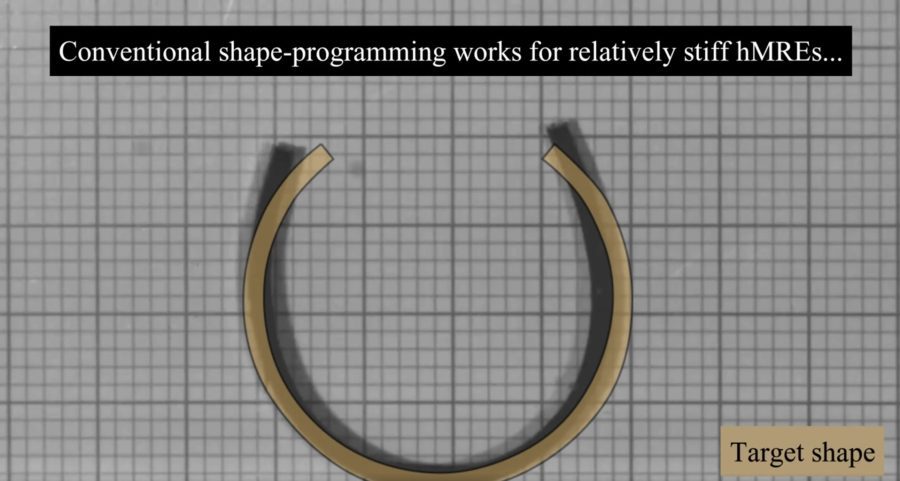
Topology and Material Optimization in Ultra‐Soft Magneto‐Active Structures: Making Advantage of Residual Anisotropies
Soft magneto-responsive materials: from biomedical applications to smart metastructures. Daniel García González
Daniel García – Beca Leonardo 2024
Related papers
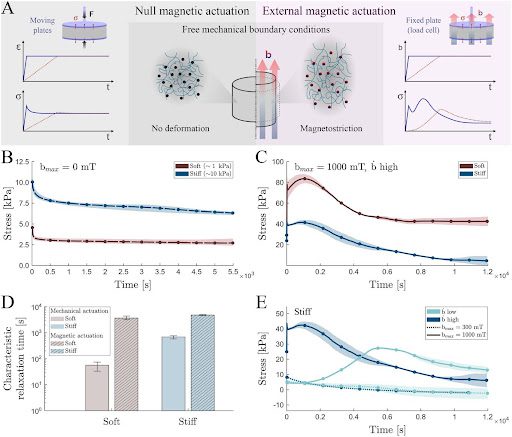
Magnetic‐Driven Viscous Mechanisms in Ultra‐Soft Magnetorheological Elastomers Offer History‐Dependent Actuation with Reprogrammability Options
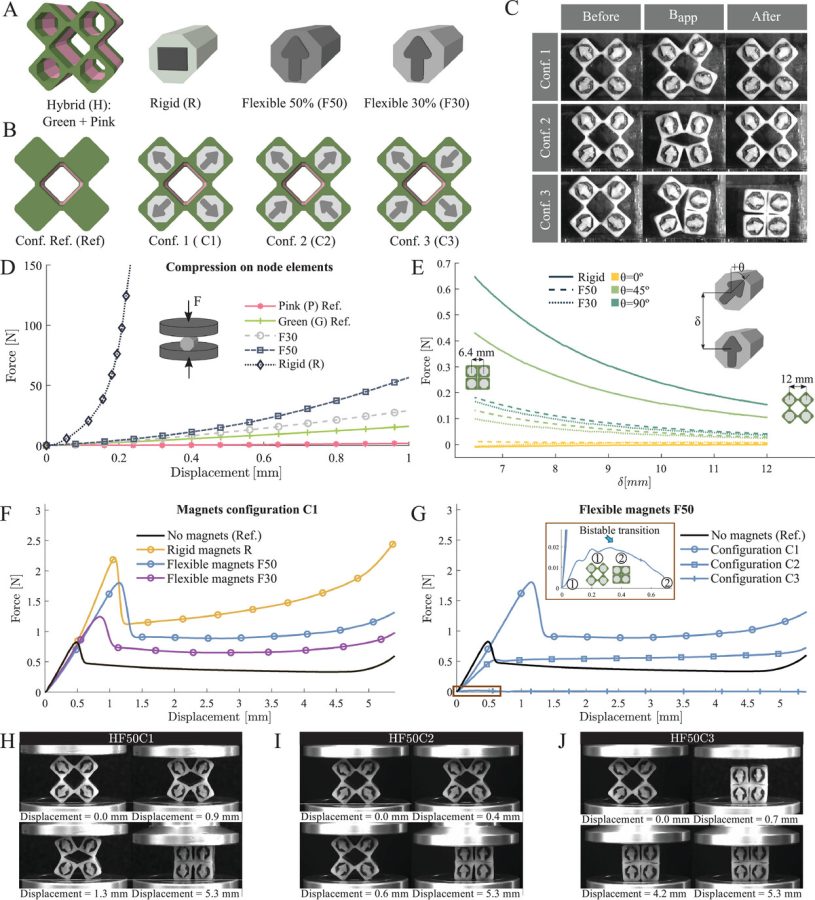
Reprogrammable Mechanical Metamaterials via Passive and Active Magnetic Interactions
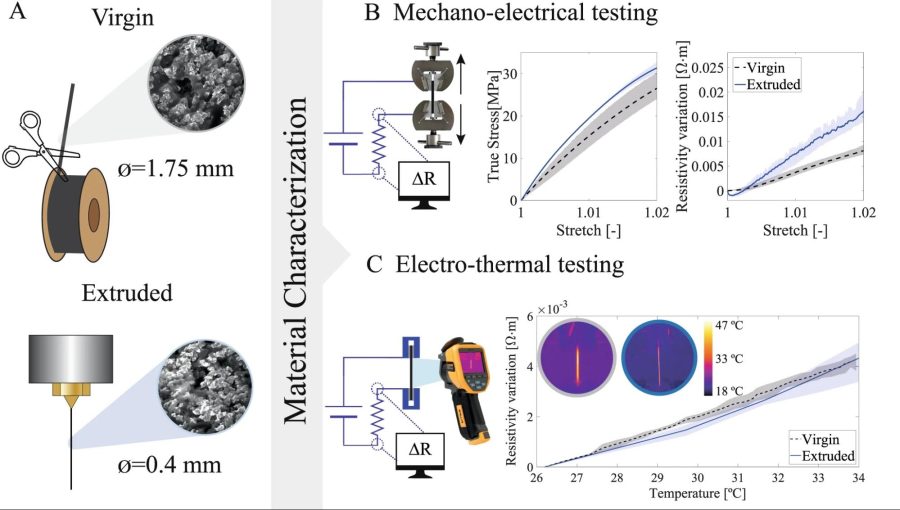
Thermo-electro-mechanical microstructural interdependences in conductive thermoplastics
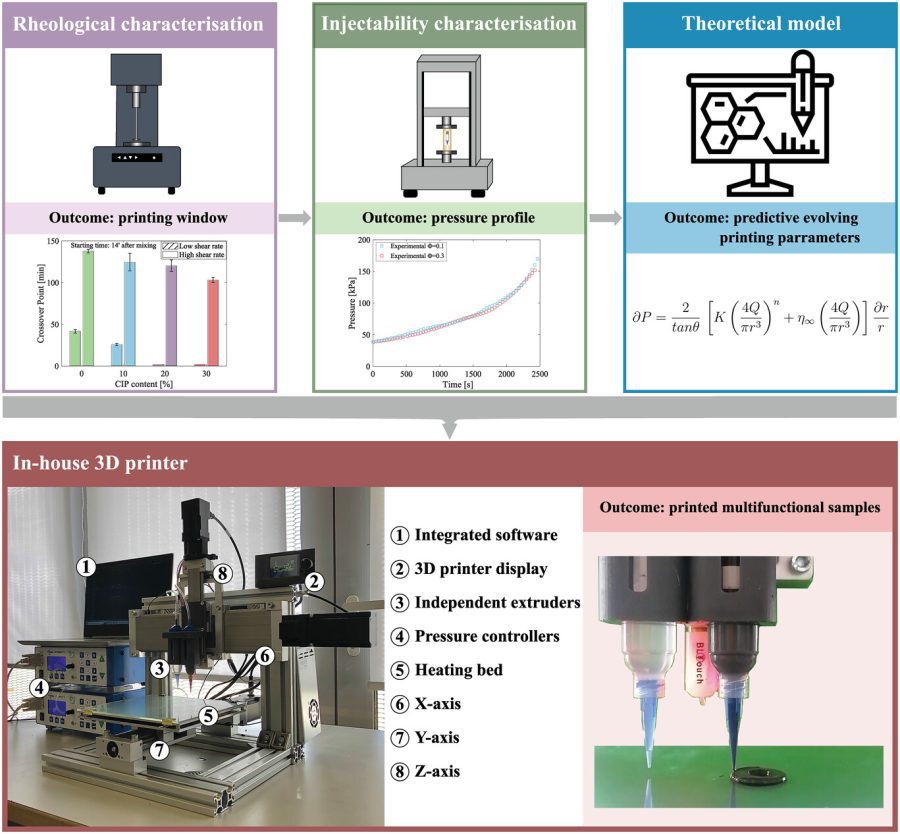
Computationally Guided DIW Technology to Enable Robust Printing of Inks with Evolving Rheological Properties